
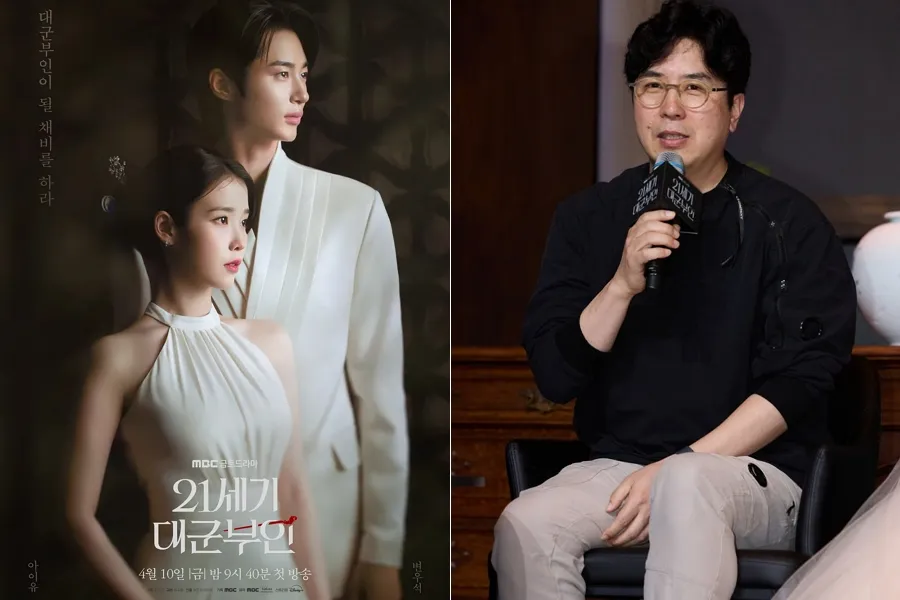
MBC drama Perfect Crown director Park Joon-hwa personally apologized for the controversy over historical distortion and accuracy surrounding the series.
On the 19th, a wrap-up interview for Perfect Crown was held at a cafe in Samcheong-dong, Jongno-gu, Seoul. Before the formal interview began, Park stood up, bowed his head, and said, "As a representative of the production team, I feel the greatest responsibility for causing viewers discomfort and disappointment." He explained that he had hoped the show would bring joy and comfort, but instead it created a series of uncomfortable situations, adding there was no excuse.
The director also expressed deep regret to the actors who made the show with him. "I’m sorry that the actors ended up facing greater hardship and pressure than the love and effort they poured in," Park said, sharing his heavy heart. As the controversy spilled beyond the drama, the cast also, unintentionally, found themselves at the center of criticism—a fact the team accepted gravely.
He went on to explain how the project began. According to Park, screenwriter Yoo Ji-won has long been fond of Joseon-era royal romances and started from the imaginative premise that, without the trauma of the Japanese occupation or foreign invasions, perhaps the Joseon dynasty might have continued for 600 years. Within that setup, they wanted to depict the love between a royal prince and a commoner and tell a story about the simple happiness of everyday life, apart from social status or ambition. Park admitted, however, that regardless of those intentions, the team should have explained the drama’s fictional premise more clearly so viewers could understand it better.
Addressing the accuracy debate, he said issues arose because the advisory direction itself was aligned with the Joseon dynasty rather than the proper historical context after the Korean Empire. Park confessed that costumes, art direction, and royal rites were designed within a Joseon framework, and he himself treated the idea of a "21st-century constitutional monarchy in Korea" as a fantasy romance without examining that area closely enough. In the end, failing to carefully scrutinize the intersection between real historical awareness and the drama’s imagined world proved to be a decisive limitation.
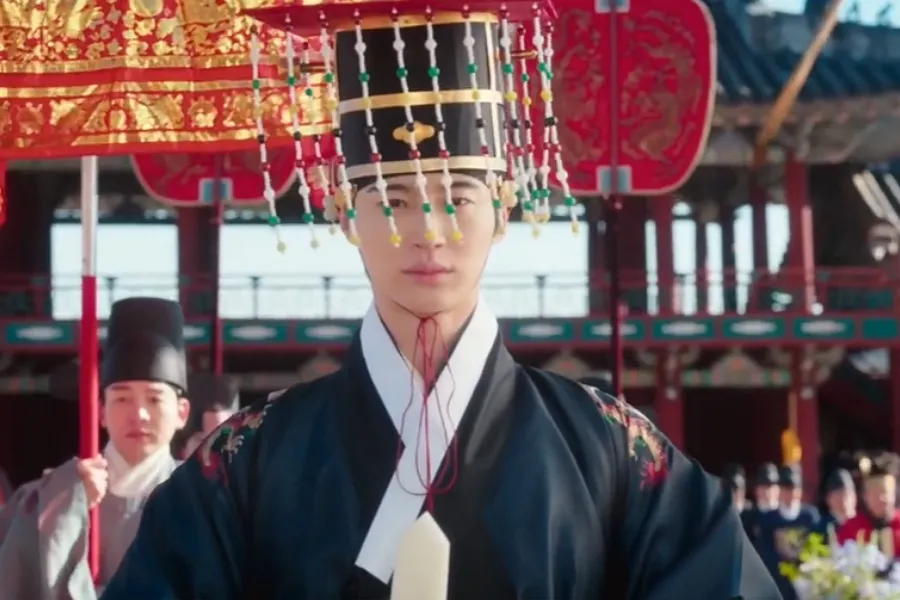
The controversy peaked during the enthronement scene of Grand Prince Ian. In the show, Byun Woo-seok’s character wore a nine-beaded myeonryu crown closer to that of a vassal-state ruler instead of the twelve-beaded imperial version, and courtiers shouted "cheonsae" instead of "manse." A tea ceremony reminiscent of a Chinese-style ritual was also included. These choices escalated the issue from simple accuracy errors to allegations of historical distortion and even Sino-centric revisionism. Park blamed himself, saying, "That was my ignorance," and regretted not properly reflecting independent symbols rooted in Korean history. He described the moment as feeling "like I’d fallen into a swamp," revealing just how disoriented he felt.
He added that he had discussed the matter with the writer. "We both said it was regrettable. The writer is having a very hard time," Park said, adding that he keeps reflecting on how they ended up with such an outcome. Since on-site decisions and interpretive choices caused substantial discomfort for viewers, he said he accepts responsibility for the result.
Toward the end of the interview, Park Joon-hwa even broke into tears. Recalling an elderly viewer happily watching the drama on a phone in the past, he said, "I’m so sorry that we left them with discomfort rather than healing."
While the show generated buzz and ratings, the weight of its lingering impression is anything but light—making this apology another stark reminder of the controversy surrounding the drama.