
Amid rising Sino-Japanese tensions sparked by Japanese Prime Minister Sanae Takaichi's remarks about intervening in Taiwan, the conflict seems to be spilling into the entertainment industry. Boycott movements against entertainers from the opposing country have surfaced in both Japan and China, creating a climate of tension surrounding cultural exchanges.
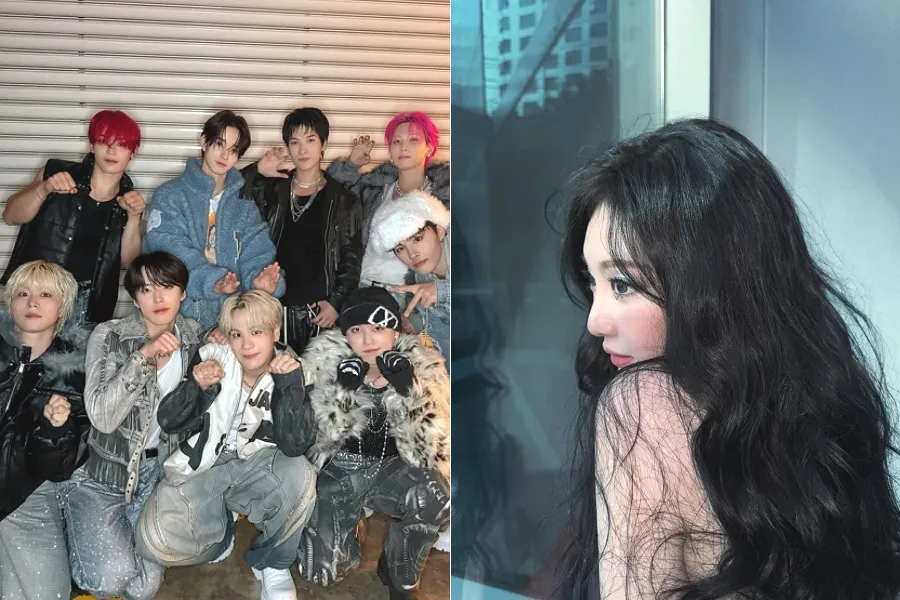
In particular, Japanese group JO1 has been directly hit in China. According to reports from Hong Kong's Sing Tao Daily and others, the Chinese music platform QQ Music announced via its official SNS that JO1's fan meeting and VIP event in Guangzhou were canceled due to "force majeure." The event was scheduled to take place on the 28th of this month at Guangzhou ICC Huamaotian Di.
JO1, an 11-member group that debuted in 2020 through TBS's Produce 101 Japan, belongs to Lapone Entertainment, a joint venture of CJ ENM and Yoshimoto Kogyo. Since all members are Japanese, there is speculation locally that this cancellation might represent a de facto retaliatory response akin to a 'limitation on Japan' in the idol industry.
On the contrary, Japanese group Aespa has found itself at the center of contention. After news broke of Aespa's participation in NHK's year-end special Kohaku Uta Gassen, a petition emerged on global platforms urging that Chinese member Ningning should not be allowed to perform.
The number of petition signers has rapidly exceeded tens of thousands shortly after its launch. Participants expressed sentiments such as, "It is inappropriate for a program of such national significance" and "We cannot let someone with a lack of historical awareness take the stage."
Ningning faced harsh criticism in Japan back in 2022 after posting a lighting photo reminiscent of the "mushroom cloud" that appears after an atomic bomb explosion. With the recent deterioration of Sino-Japanese relations, this controversy resurfaces, fueling discussions about canceling Ningning's participation in Kohaku Uta Gassen. Some petitions submitted to NHK reportedly included claims that it could reopen wounds for victims and their families of the Hiroshima atomic bombing.
In this context, Japanese celebrities active in China have declared their support for the "One China" policy. Japanese singer MARiA, who gained recognition on Chinese variety shows, stated on SNS, "China is my second hometown, and my Chinese friends are precious family," reiterating her commitment to the "One China" principle.
Actor Koji Yano, who has played roles as Japanese military officers in Chinese films and dramas, also drew attention by stating, "China has taught me the true meaning of 'home,'" and added, "I will forever support 'One China.'"
Experts express concerns that if the diplomatic conflicts persist, they could have repercussions across travel, study abroad, content exchanges, and broader cultural industries including K-pop and J-pop between the two countries.
The cancellation of JO1's fan meeting and the controversy surrounding Aespa's participation in Kohaku Uta Gassen are emerging as symbolic events that assess the cooling status of Sino-Japanese relations.