
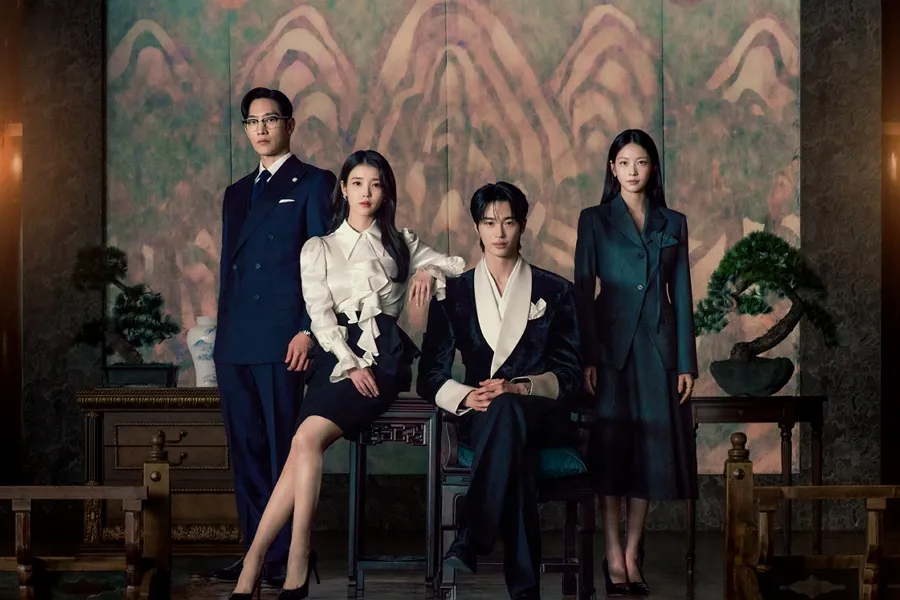
Shocking fact-check: Historian Sim Yong-hwan dissected MBC’s drama Perfect Crown, praising its imaginative premise while calling out unlikely power politics, weak historical grounding, and sloppy world-building.
On the 28th, the YouTube channel Hyeonjaesa-neun Sim Yong-hwan posted a video titled 'Historical Analysis and Fact-Check of the Drama Perfect Crown'. In the video, Sim assessed IU and Byun Woo-seok’s Perfect Crown, saying, "Alternate-history works are meaningful because they expand imagination," but added, "If the evidence had been more precise, it could have been a far more polished piece."
His biggest criticism targeted the setup where Grand Prince Ian effectively wields real power on behalf of a young king. Sim argued this is "impossible from a historical perspective," explaining, "Joseon strongly blocked political intervention by royal kinsmen." Especially after King Sejo seized power, the court was highly wary of concentrating authority in the hands of royal relatives. So a structure where a grand prince becomes a power broker, as depicted in the drama, clashes with Joseon’s political system. Still, Sim quipped, "What can you do? Byun Woo-seok is the lead," wryly pointing out the gap between narrative needs and historical reality.
He also offered a cold, clear take on the constitutional monarchy premise. "In Korea, the continuation of a constitutional monarchy was virtually impossible," Sim said, citing how the Joseon royal family failed to play an active historical role after the loss of national sovereignty. He interpreted the show’s core setup as an alternate-history plot borrowing from a Japan-style imperial narrative.
Sim continued with frustrations over fine-detail research. Regarding the palace fire scene, he explained, "Small fires were handled with water buckets called 'deumeuro', but for large blazes, the Geumhwagam would demolish wooden pavilions to stop the spread." On the royal academy’s demerit system, he added, "Joseon valued debate, discourse, and deliberation; you can’t reduce it to simple top-down obedience," expressing disappointment.
Wardrobe and titles also raised issues. While red garments weren’t outright banned in the royal household, there were strict hierarchies in hues and patterns. Using official-robe emblems reserved for royal kinsmen, and styling that looks like loosening a dragon robe, violate etiquette; yet, from a modern hanbok design experiment perspective, he allowed there’s room to view it separately from strict historical rules.
Sim didn’t end on criticism alone. He emphasized that while works like Perfect Crown may show historical gaps, Hallyu’s reimagining of historical themes is part of creating new cultural forms. In the end, when tighter research meets bolder imagination, alternate history can transcend simple fantasy and open new possibilities for Korean-style cultural content.