
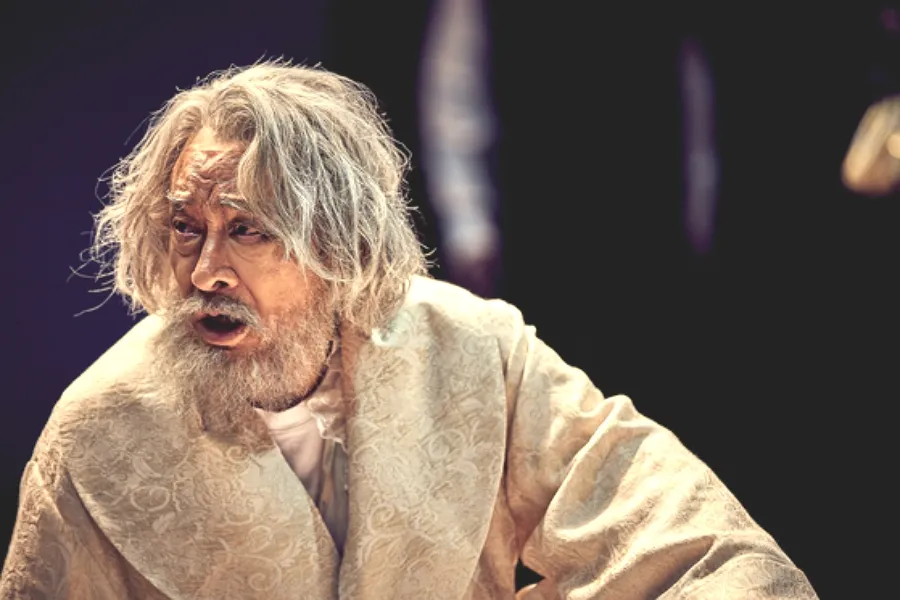
Lee Soon‑jae, the oldest active actor in Korea who shaped the history of broadcasting and theater, has passed away at the age of 91.
According to his family, Lee Soon‑jae closed his eyes on November 25. Until last year, he remained active in both theater, appearing in Waiting for Godot, and in the KBS2 drama Bark, continuing his vigorous activities across dramas, movies, and theater. However, starting late last year, he canceled some theater performances due to health issues and took a break, causing concern among fans.
Born in 1934 in Huiryeong, North Hamgyong Province, Lee moved to Seoul with his grandparents when he was four years old. Although his registered birth year is 1935, he experienced liberation during his elementary school days while helping his grandfather in business at Namdaemun Market, and endured the tumultuous times of the Korean War during his first year of high school.
After enrolling in the Philosophy Department at Seoul National University, Lee became absorbed in films, which were the cheapest luxury for university students at that time. He often recalled that watching Hamlet, starring Laurence Olivier, inspired him to become an actor. He made his stage debut in 1956 with Beyond the Horizon and began his dynamic career in television, film, and theater after being signed as a TBC first‑generation actor in 1965.
Lee’s filmography is extensive, including dramas such as I Will Become a Human, Again and Again, Bathhouse Men, and Mom Has Gone Mad! Major works amount to 140, with some months seeing him film over 30 productions even in supporting roles.
In the drama Love is What It Is, often considered a national drama, Lee broke the ratings record with a 65% share, bringing laughter and tears to the nation as “Daebari’s Father.” His character resonated with the social atmosphere of the time, solidifying his status as an icon of the era.
His presence in historical dramas was equally overwhelming. He stood at the center of productions in the 1970s and 80s, including The Song of the Crown Princess, Queen Inmok, and Wind & Cloud. Later, he showcased his charisma through roles such as teacher Yoo Uis‑tae in Hur Jun, as well as in Sang‑do and Lee San.
Even when already considered a legend, he continued to challenge himself. In his 70s, through sitcoms like High Kick! and High Kick Through the Roof, he broke away from his serious image to create comedic roles that captivated audiences. His “adult content” character became a sensation among children, enjoying popularity across generations.
Lee’s energy also shone in variety shows. In Grandpa Over Flowers, his quick pace and diligent personality earned him the nickname “Straightforward Soon‑jae,” leaving a deep impression on viewers with his vitality and curiosity.
In later years, he returned to the theater stage, engaging audiences through plays such as Death of a Salesman, Old Couple Story, Senior’s Store, Henri and Me, and King Lear. Particularly in King Lear, he received acclaim for flawlessly delivering extensive lines throughout the 200‑minute performance. In 2023, he directed Chekhov’s The Seagull, bringing it to the stage with junior actors.
Though devoted to acting, Lee briefly ventured into politics. He entered the National Assembly in the 1992 general election as a candidate for the Democratic Liberty Party for Seoul Jungnang Gap and held positions as deputy spokesperson of the People’s Party and secretary of the Korea‑Japan Parliament Association. He later returned to acting, continuing to advocate for his peers’ rights through the Actors Association.
He was passionate about fostering junior talent. Until recently, he served as a distinguished professor in the Department of Acting Arts at Gachon University, imparting skills and attitudes accumulated over a lifetime to aspiring actors. Last year, he was honored as the oldest recipient of the Grand Prize at the KBS Acting Awards, expressing his gratitude by saying, “Thank you for allowing me to live as an actor.”
After 69 years of working as an actor and living life on stage, Lee Soon‑jae departed while remaining close to the stage and camera until his last moments. The space left by this towering figure, who symbolized an era in Korean popular culture, will continue through his works, lines, and the efforts of junior actors.